Dish guide
Chè in Hanoi
Chè is a family of sweet bowls, not one recipe. What this grass-jelly bowl shows, and what it cannot tell you about the other pieces.
Hanoi Taste Tours Editorial Team
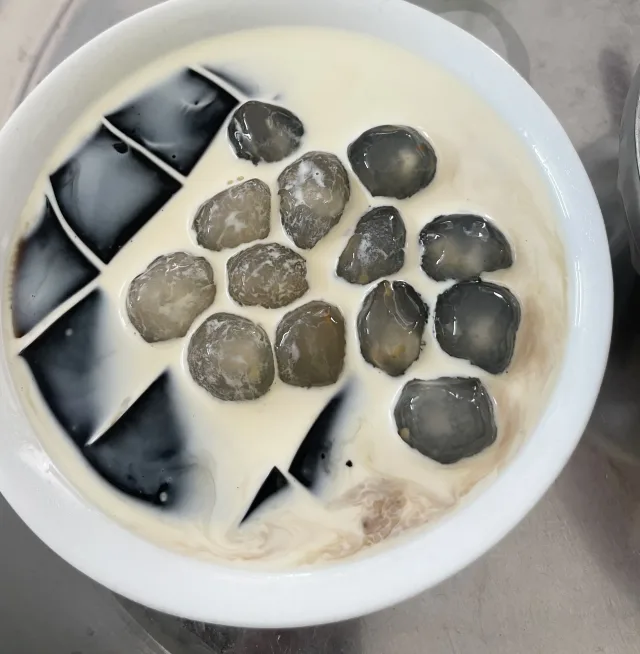
Chè is the family name for Vietnamese sweet soups and puddings. It is not one recipe. A shop may sell several bowls from the same ice box, each named for its main ingredient. The bowl in the photograph is a pale liquid with black jelly cubes and a cluster of round pieces. The liquid looks milky; the photograph does not establish that it is coconut milk. The black cubes are the form Hanoi shops usually mean by sương sáo, grass jelly. The round pieces are not named here. They may be dumplings, beans or fruit. Ask which one is in the bowl if you need to avoid an ingredient. This photograph is one chè, not every chè you will meet.
What the bowl is doing
The liquid is sweet and cooling. Coconut milk is the usual base. Some shops also stir in condensed milk, which is dairy. The jelly is mild and slippery. The round pieces change the texture from spoonful to spoonful. Ice may be in the bowl or already melted into it. This is a pause, not a meal. It does not replace lunch, and it is not egg coffee.
When Hanoi eats it
Chè belongs to a hot afternoon, or the end of a walk, more often than to breakfast. A cold morning is the wrong hour for an iced sweet. That is why bánh trôi tàu — warm rice balls in ginger syrup — is a different dessert. A café that pours coffee may not sell chè. A sweet shop that sells chè may not make egg coffee. Hanoi coffee culture is about the cup. This page is about the bowl.
Taste and how to order
Point at the bowl you want if the names are only in Vietnamese. Ask whether it is very sweet, and whether condensed milk is in it, before you commit if dairy or sugar matters. Portions are usually for one person. Share if you are only curious. Eat it while it is still cold. A melted bowl is mostly sweet liquid, and the jelly goes soft at the edges.
When a shop uses coconut milk, the taste is usually gentle: coconut, a little sugar, the clean slip of the jelly, and whatever the round pieces add. This photograph does not establish that flavour. It should not taste of the savoury kitchen next door. If it does, you are in the wrong bowl.
Dietary and allergy notes
Coconut is common. Condensed milk may be present even when the menu says coconut. The unnamed round pieces are the allergy question. Peanuts, beans and wheat dumplings all appear in the wider chè family, and this photograph cannot certify which one you are seeing. There is no meat in a typical sweet chè, but a shared spoon and a busy ice box are not a controlled kitchen. If you need a strict answer, ask, and choose another bowl if the answer is vague.
With a guide
Coffee & Sweet Traditions is the private afternoon to enquire about if you want a coffee and a sweet explained together. The bowl in the photograph is an example. It is not a promise that this exact chè is served. Nothing is booked until you confirm the proposal in writing.