Dish guide
Bánh trôi tàu in Hanoi
Sticky-rice balls in syrup with peanuts and sesame. “Glutinous” does not mean wheat gluten, and the bowl is not an allergy certificate.
Hanoi Taste Tours Editorial Team
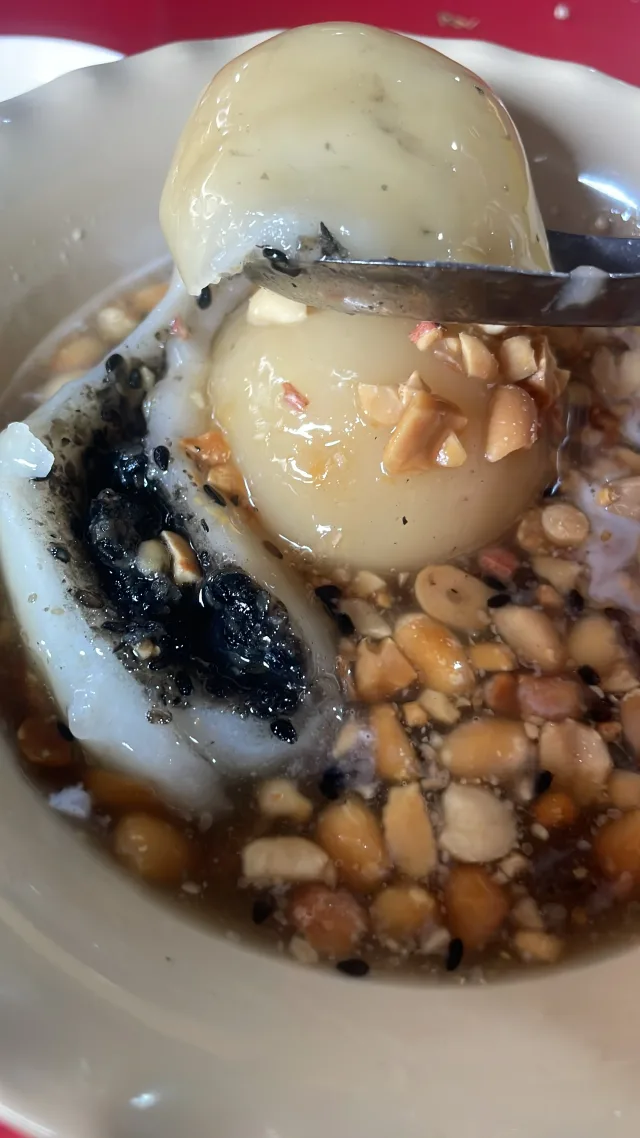
Bánh trôi tàu is a small, hot dessert that still feels like street food. In the photograph, rice balls sit in a sweet syrup with crushed peanuts and sesame. One ball is open onto a dark filling. Shops often scent this syrup with ginger, and they may fill the balls with mung bean or black sesame paste, or finish the bowl with coconut cream. Those are habits of the dish. This frame does not prove them. You eat it with a spoon while the syrup is still warm.
What the name suggests
“Trôi” points to the way the balls float in liquid; “tàu” in Hanoi usage marks this ginger-syrup version rather than a savoury ball soup. Do not confuse it with bánh trôi nước served on other occasions with different toppings — ask what is in the bowl if the menu is unclear.
Texture and taste
The rice shell is soft and slightly chewy when freshly cooked. A good ball holds together without being gummy. If the shop scents the syrup with ginger, it should taste warm and sweet, not sharp like raw ginger juice. Peanuts add crunch; sesame adds depth. Coconut cream, when a shop uses it, rounds the sweetness rather than turning the dish into a milk dessert.
When Hanoi eats it
This is often an afternoon or evening sweet, especially when the air is cool. It pairs with a pause rather than replacing a meal. Coffee shops and sweet stalls may both sell it; neither setting makes it more or less “authentic” — read the bowl in front of you.
How to order
Order one bowl per person unless you are sharing deliberately. If you dislike ginger, ask whether this bowl is ginger-scented before you order — many shops make that the point, and this photograph does not show the ginger. If you avoid peanuts, ask whether they are mixed into the syrup or only sprinkled on top. The photograph shows peanuts in the syrup.
Dietary notes
“Glutinous” in glutinous rice means sticky rice. The name does not mean the rice contains wheat gluten. The photographed bowl shows rice balls, a dark filling, peanuts and sesame in syrup. That is not evidence the finished dessert is free of wheat gluten, and it is not an allergy-safe or chay certificate. A shop may add other fillings, a thickener or an accompaniment, and a shared kitchen can introduce wheat or other allergens that are not in the frame. Ask about the full preparation if you avoid wheat gluten, peanuts or sesame. Ask separately how the syrup and toppings are prepared before treating the bowl as chay. Egg and dairy are uncommon; coconut appears only when a shop uses it.
Variations you may see
Some bowls use more coconut cream; others keep the syrup almost clear. Filling colour varies — black sesame shows dark when a ball is cut open. None of these details requires a ranking; they show the cook’s habit.
Further reading
For how sweets fit between meals, see Hanoi coffee culture and egg coffee. For broader context on shared tables and special-occasion foods, see Hanoi food culture.
With a guide
Coffee & Sweet Traditions is the experience to ask about if you want café and sweet stops chosen with a guide. Stops and portions are confirmed in a proposal — not promised by this page.