Dish guide
Bánh mì in Hanoi
How a Hanoi bánh mì is built, what the roll in our photograph actually shows, and how it differs from a morning bowl.
Hanoi Taste Tours Editorial Team
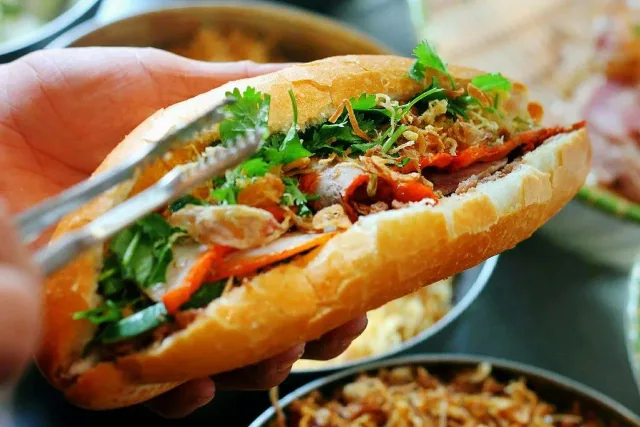
A bánh mì is a filled baguette, eaten in the hand. It is not a breakfast bowl and it is not a plate you assemble with chopsticks. The bread is the structure: a thin crust, a soft interior, and room for a savoury filling. Some Hanoi counters keep that filling simpler than the very full rolls visitors know from other cities. Others do not. Read the roll in front of you.
The photograph shows a crusty baguette with herbs, shredded pickled carrot, fried shallots and sliced pork. A red strip is visible among the filling; the picture does not identify it as chilli. A pale layer is visible among the meat. That layer is often pâté or a pork spread, but the picture alone does not name the spread. This is one shop’s filling, not a recipe every counter must copy.
What is usually inside
The loaf is wheat bread. Cooked pork, often chả lụa or another slice, is the usual centre. Coriander is the herb you will see most often. Pickled carrot and daikon, cucumber, chilli and fried shallots appear when the shop works that way. A little chilli sauce may be brushed on. None of those extras is required for the thing to be bánh mì.
Point at the filling if the counter only displays the bread. If you do not eat pork, say so before the roll is made. A meat-free filling is a different order, and many busy counters do not keep one ready.
Taste and texture
You want contrast: crackle from the crust, softness from the crumb, salt and herbs, and something rich from the pork or the spread. Chilli is optional. A roll that is only soft bread and a thin smear has missed the point. A roll so full that the bread collapses is the other mistake. Eat it soon. The crust softens as it sits, and the pickle makes the crumb damp.
How travellers order it
Treat it as one stop, not the whole morning. It suits a walk between a bowl and a coffee, or a lighter breakfast when you do not want broth. Eat it standing or on a low stool. Hold it so the filling stays inside.
A short counter and people who already know the filling are better signs than a laminated photograph on a tourist street. The Hanoi breakfast page is the bowl that usually opens the day. A warm rice-flour bowl such as bánh đúc nóng is another morning plate. This page is only the sandwich.
Dietary and allergy notes
The bread contains gluten. Pork is the usual centre. Fish sauce can be in the pickle or the seasoning even when you cannot see it. Peanuts are not the standard filling, but a shared counter is not an allergen-free kitchen. Do not confuse this roll with egg coffee; egg is not what defines bánh mì. If you need a meat-free version, ask whether the spread, the sauce and the pickle are prepared without meat or fish. A vegetable in the window does not answer that question.
With a guide
Hanoi Morning is the private journey to enquire about if you want breakfast paced with a guide. The roll in the photograph is an example of the food, not a stop that has been booked. The proposal confirms what you will actually eat, including anything you cannot eat. Nothing is confirmed until that proposal is agreed in writing.